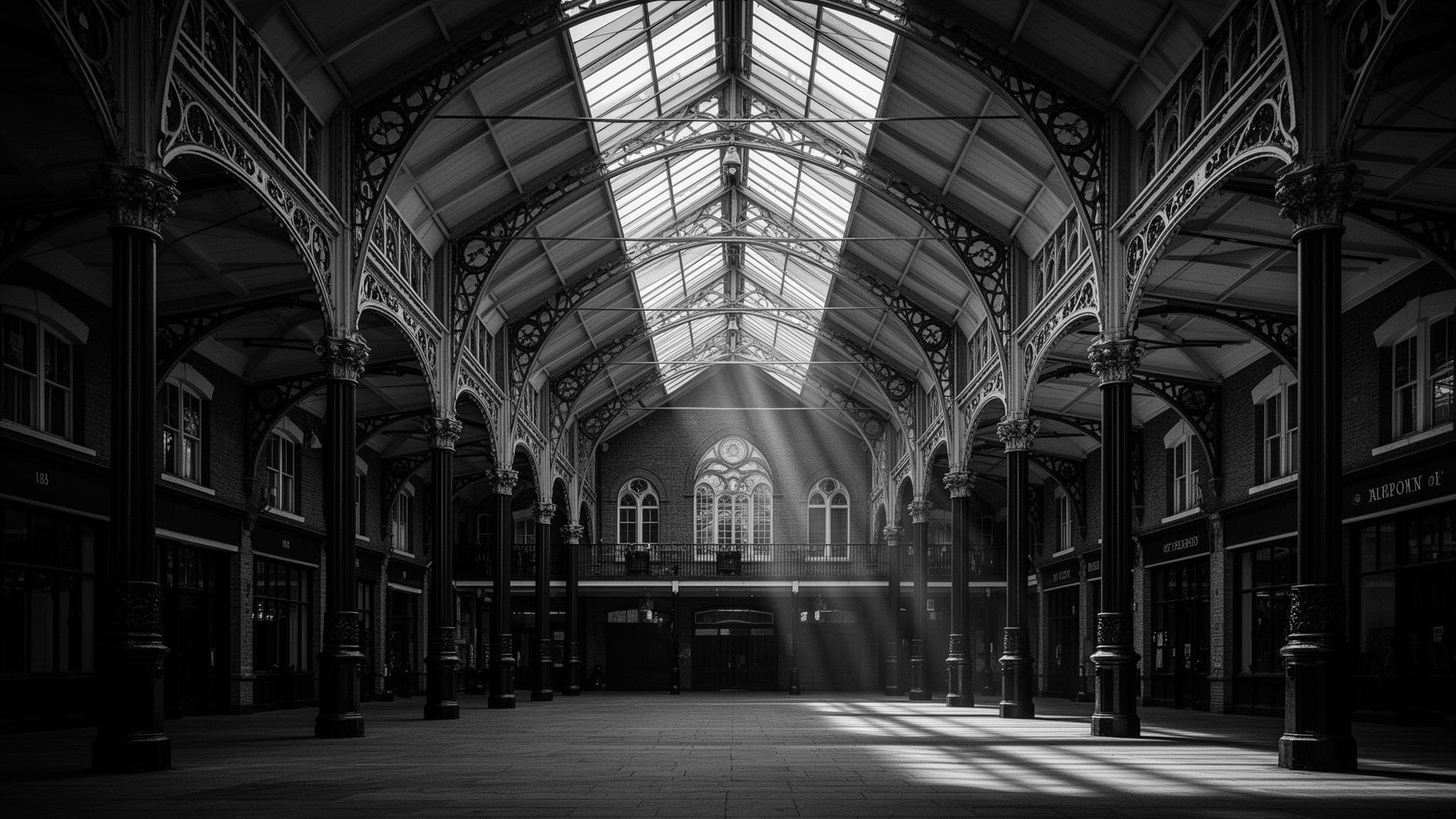
Open Market · London E1
GENDO 48
£5,000 First Prize
Open to all48 hours. One Victorian iron hall.
The future of East London.
The first Gendo 48 Competition. A 48-hour architectural hackathon at Old Spitalfields Market — not a beauty contest, a test of design intelligence. The brief is now live — download the PDF for links to all assets needed.
Submissions are closed. The 22-strong shortlist is live.
Thank you to every team that submitted across the weekend. Winner, People's Choice and Honourable Mentions will be announced shortly. The shortlisted entries are now published in Resources — each with a live, pannable canvas.
Key Dates
All times GMT. No extensions — work visible on the board after the deadline will not be assessed.
Brief Drops
23 Apr 2026
11:59 GMT
Competition Period
23–26 Apr 2026
Gendo Unlocked — 48hrs
24–26 Apr 2026
Submission Deadline
26 Apr 2026
23:59 GMT
Internal Shortlist Review
27 Apr – 6 May
Shortlist Announced
6 May 2026
Winners Announced
11 May 2026
Monday
Brief Drops
23 Apr 2026
11:59 GMTCompetition Period
23–26 Apr 2026
Gendo Unlocked — 48hrs
24–26 Apr 2026
Submission Deadline
26 Apr 2026
23:59 GMTInternal Shortlist Review
27 Apr – 6 May
Shortlist Announced
6 May 2026
Winners Announced
11 May 2026
MondayFriday 23:59 GMT — Gendo unlocks
Every entrant gets the full Studio plan for the weekend — unlimited renders, no watermarks, no feature locks. Your access switches automatically.
-
01
Register
Sign up to reserve your spot. Your weekend access is linked to this email.
-
02
Read the brief
Site, programme, deliverables, judging criteria and asset links — all inside the PDF.
-
03
Submit your entry
Upload your board before Sunday 23:59 GMT. One entry per team.
GENDO 48: Open Market is the first edition of a recurring architectural hackathon built around the speed and intelligence that Gendo makes possible. We are not looking for the most spectacular render. We are looking for design intelligence.
48 hours on the clock. £5,000 for the best work. Go.
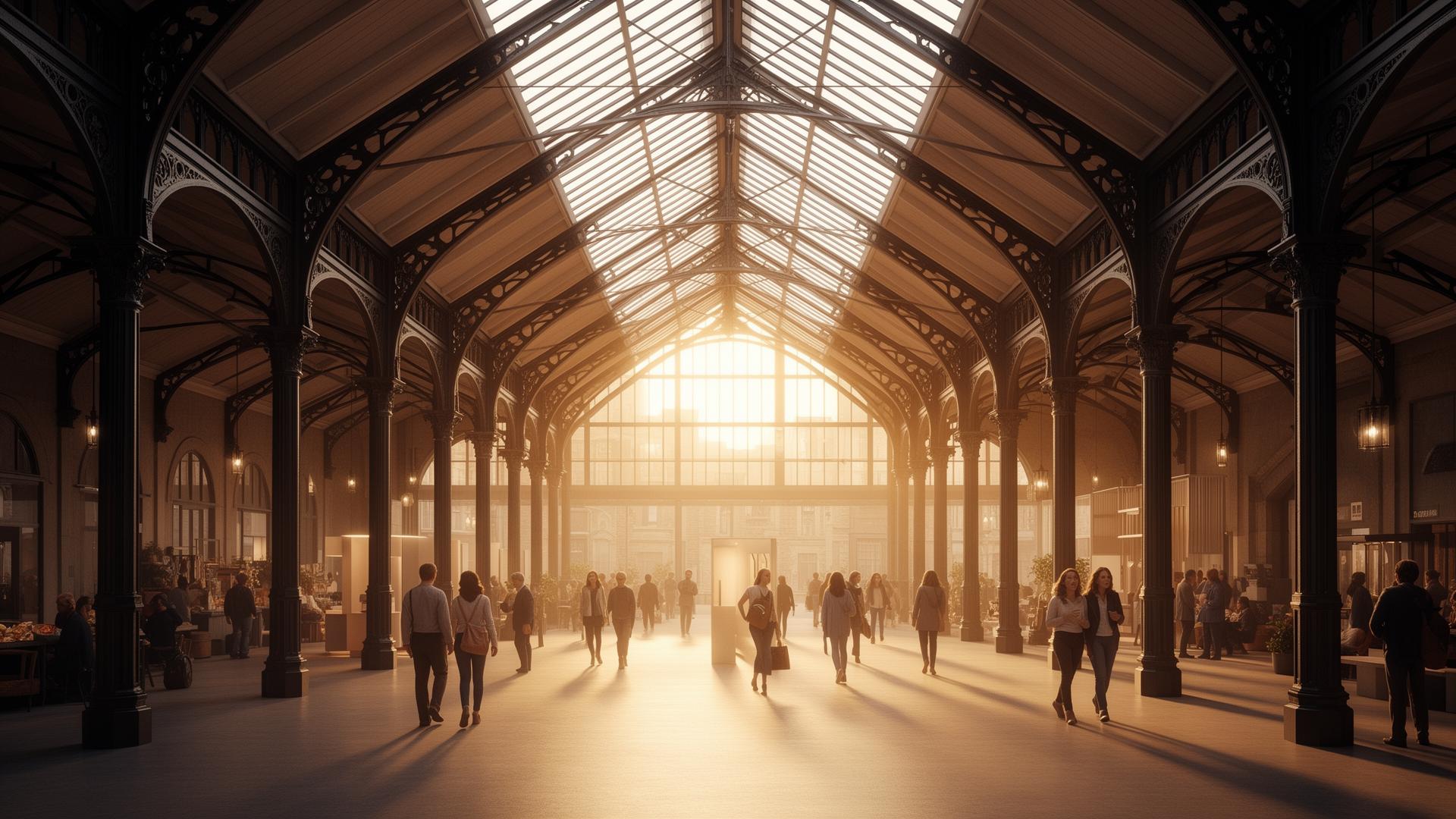
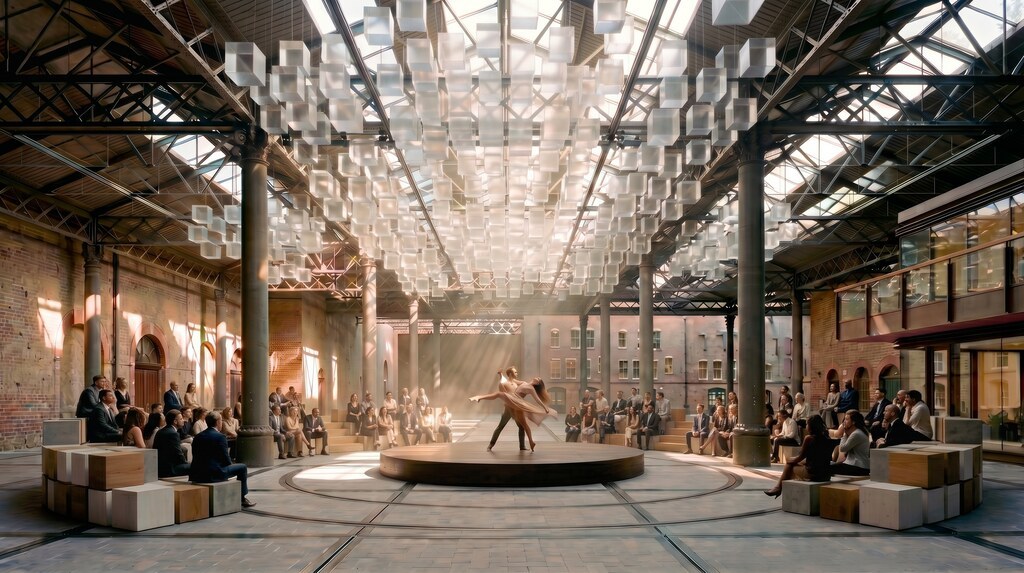
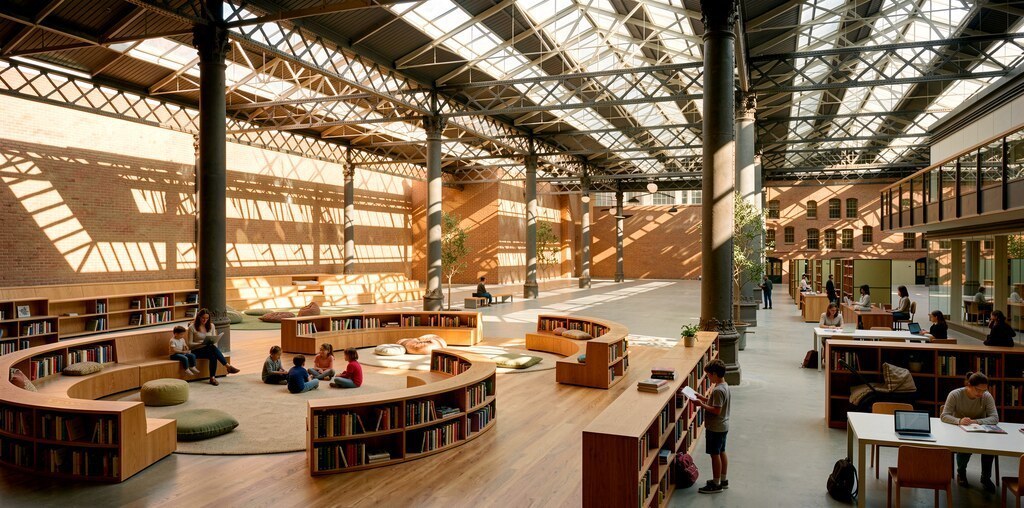
Speculative render — Gendo AI
Propose a new civic institution for East London within the iron envelope of Old Spitalfields Market.
Scenario: in 2030, the Spitalfields Market Trust has issued an open brief. The market programme has relocated. The Victorian iron hall is freed — empty of tenants, free of furniture, full of four centuries of possibility.
Not a hotel. Not luxury residential. Not a corporate headquarters. Not a museum to its own history. The brief calls for something that serves the public — across many hours of the day and many rhythms of the city.
Your proposal must meet five tests
01
Civic
Publicly accessible. Not primarily commercial. Serves the whole borough, not a demographic.
02
Temporal
Designed across time — not for a single moment. The heart of the brief.
03
Structural
The iron structure is the protagonist. Columns, trusses, glazed lantern — not obstacles, the reason this building is extraordinary.
04
Historical
Coherent with what the building has been. The next chapter, not a demolition of everything that came before.
05
Feasible
Buildable, fundable, governable by real people in a real city. Ambitious is good. Architecturally impossible is not.
Old Spitalfields Market
350 years of reinvention · Grade II listed
There has been a market on this ground since 1682. The Huguenot weavers, the Jewish traders, the Bangladeshi families, the creative economy — each generation changed what was sold, who sold it, and what the building meant. The iron hall remained.
Designed by George Campbell Sherrin and built 1885–1893. Saved from demolition in the 1980s. Renovated by Foster + Partners in 2017. One of the finest examples of Victorian market architecture in existence.
- Address
- Horner Square, Commercial Street, London E1 6AA
- Listing
- Grade II Listed
- Built
- 1885–1893
- Architect
- George Campbell Sherrin
- Renovation
- Foster + Partners, 2017
- Floor area
- approx. 9,500 m² covered
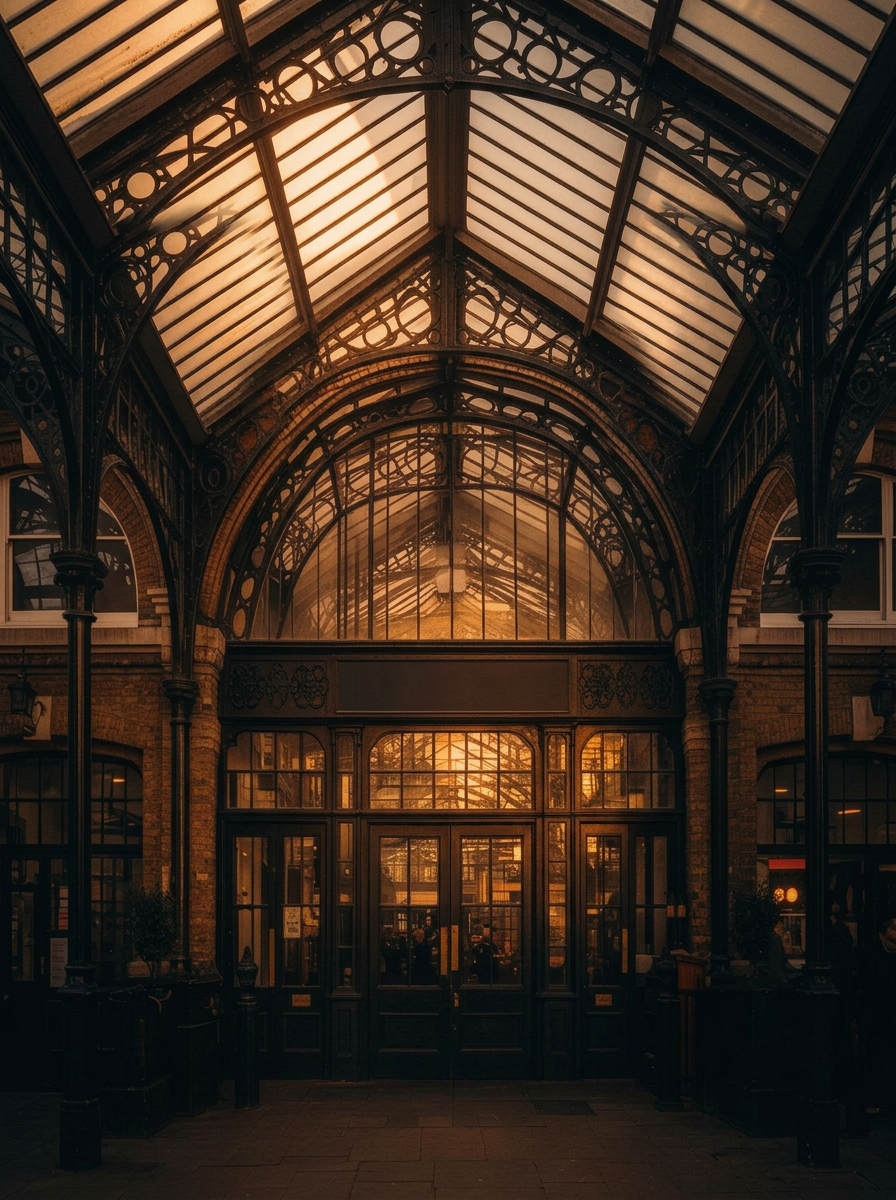
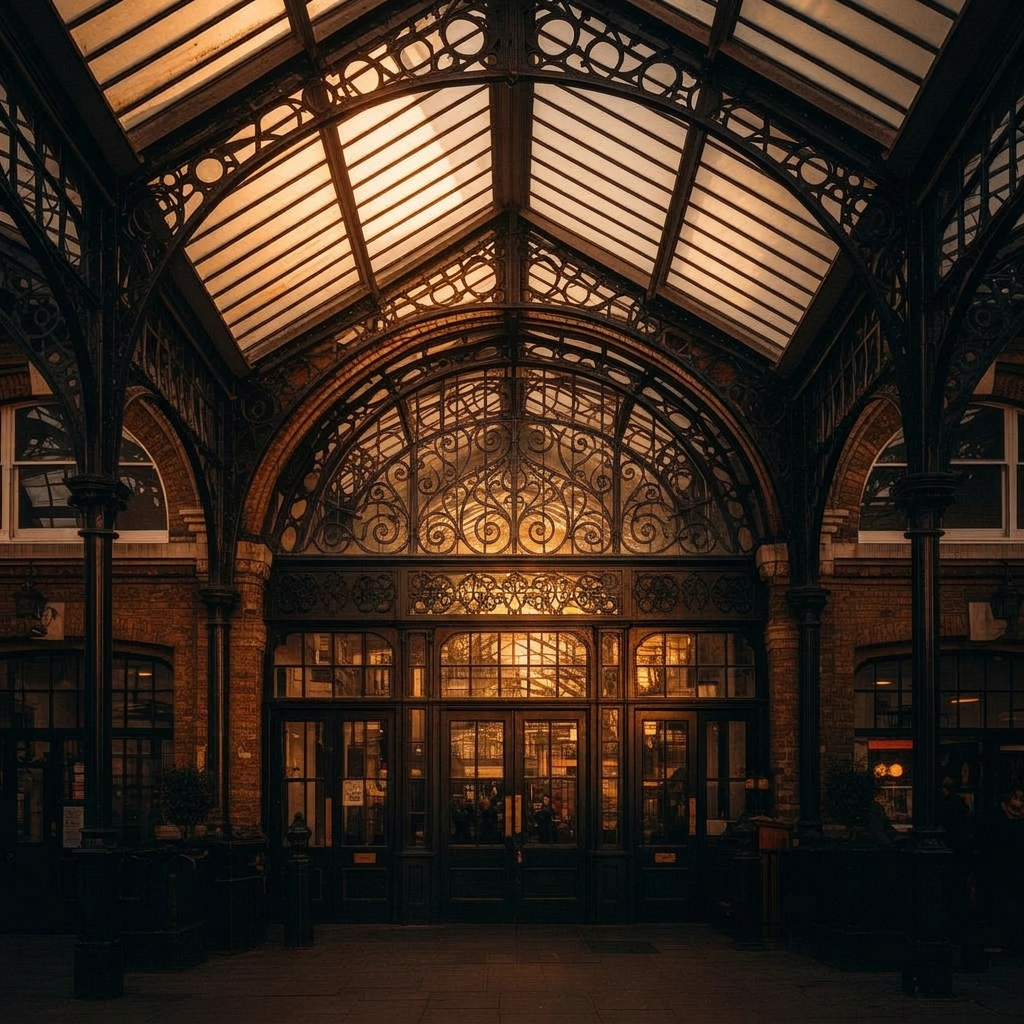
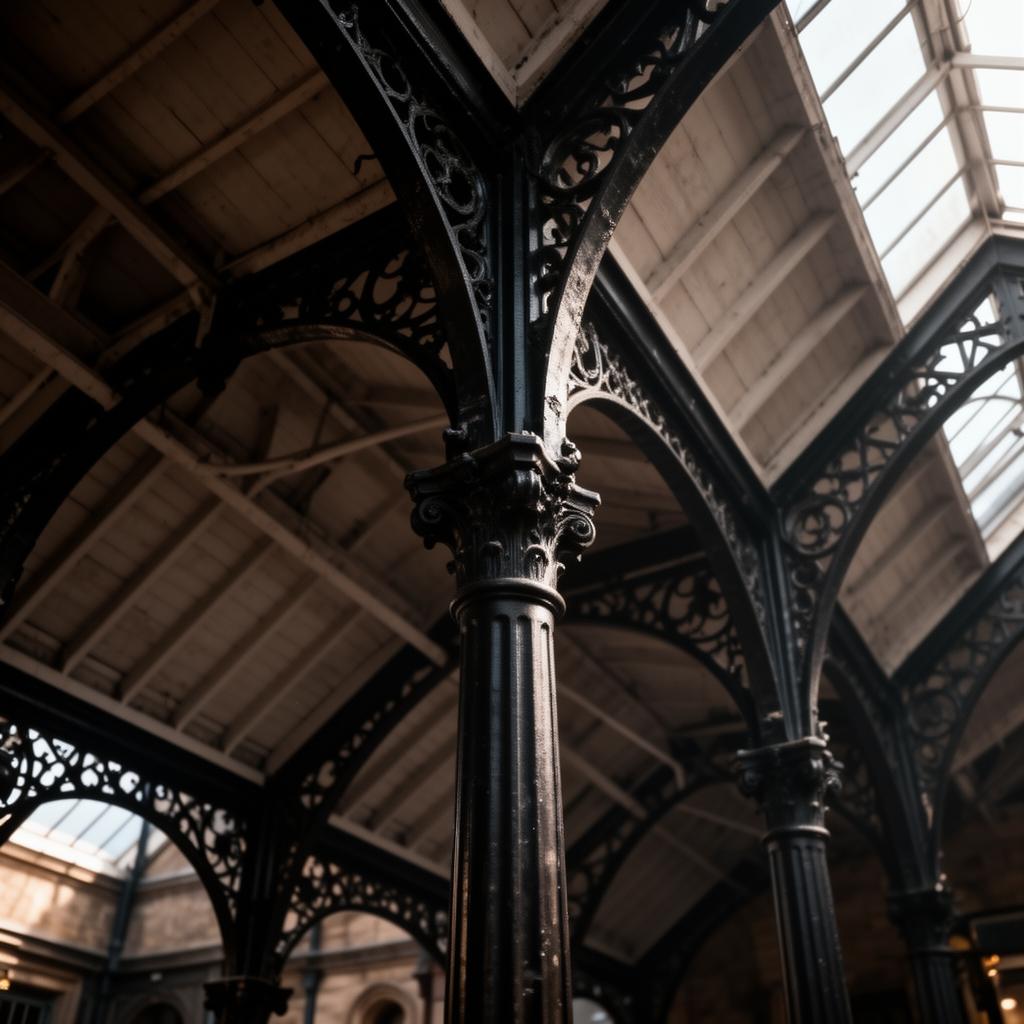
The iron is the protagonist.
The architectural intelligence of any proposal lies in what you do with the iron, not instead of it.
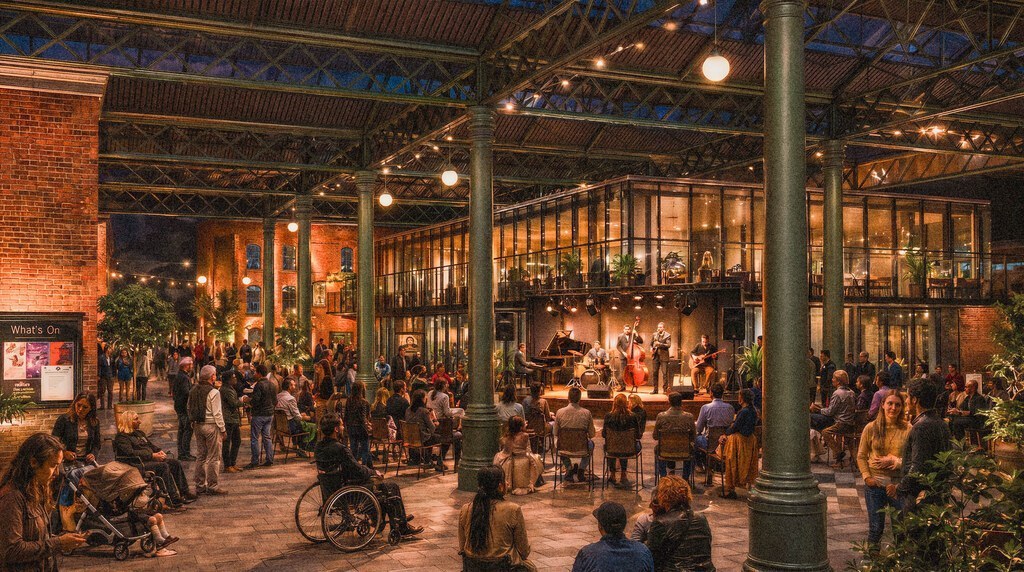
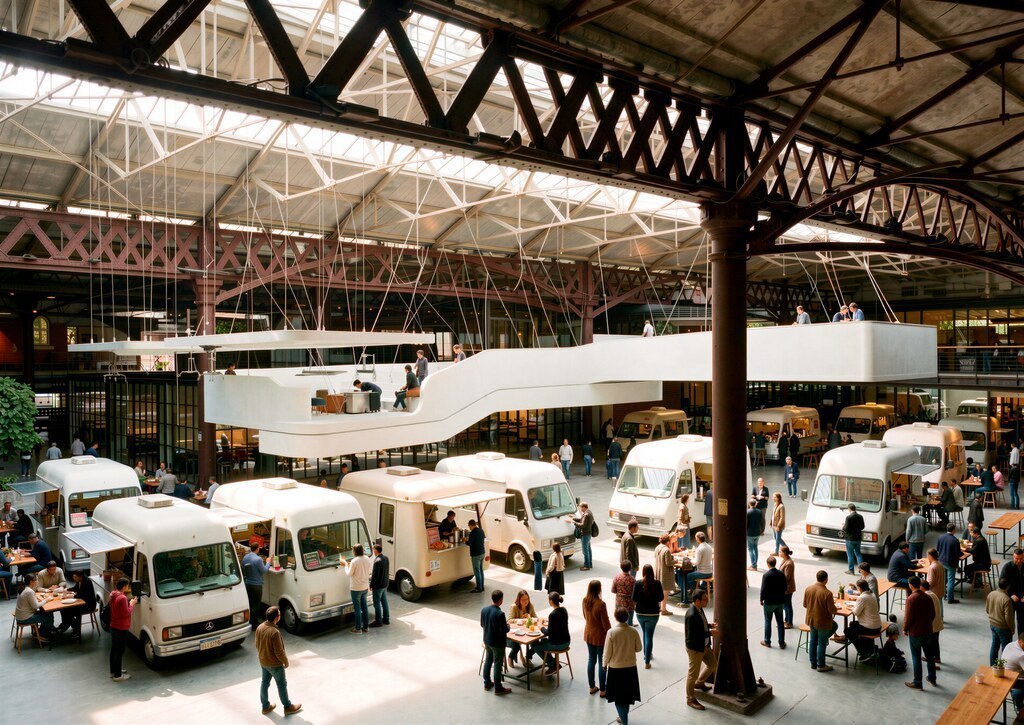
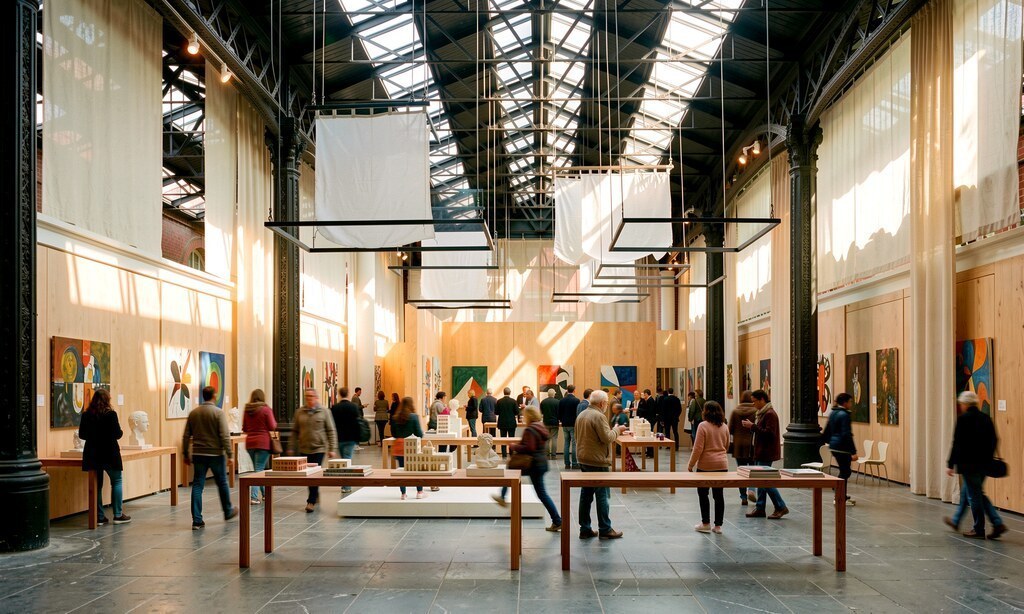
Speculative renders — Gendo AI
Fixed — what the competition protects
-
Cast-iron column grid
Columns, capitals, base plates in their existing positions and proportions.
-
Hybrid roof truss system
Bowstring trusses and the continuous glazed lantern above the nave.
-
External envelope
Horner Square perimeter walls and shopfront elevations.
-
Existing floor level
The stone floor plane is the datum. Insertions can sit on, rise from, or be suspended above it.
Open — your design domain
-
All insertions
Between, below and above the column grid — new floor levels, mezzanines, platforms.
-
Interior programme & fit-out
What happens in the space, at what time, and for whom.
-
Light
How the glazed lantern is supplemented, modulated, dramatised, or contrasted by artificial and seasonal light.
-
Connections
How the building opens to Commercial Street, Horner Square, Brushfield Street, the surrounding city.
-
The roof surface
Can be activated, walked on, planted, opened to the sky. Cannot be removed.
Designed across time, not for a single moment.
The market has never been a single-state building. Your proposal must show it across at least two distinct temporal states — the choice of which states is itself a design decision.
The brief does not prescribe a programme. It prescribes a quality: the quality of being genuinely alive across time.
Cycle 01
Daily
Traders before dawn, the quiet of midday, the night city outside. The glazed lantern transmits all of it — morning light is nothing like midnight warmth.
Cycle 02
Weekly
Sundays packed; Wednesdays breathing. Different communities occupying different rhythms within the same week.
Cycle 03
Seasonal
December's Christmas market; Ramadan on Brick Lane; the June solstice flooding the lantern; Spitalfields Music Festival outside.
Cycle 04
Historical
The Huguenots, the Jewish traders, the Bangladeshi families, the creative economy — each era brought its own hours, its own claim on the space.
Cycle 05
Unplanned
Pandemic. Political upheaval. Collective grief or celebration. What this building becomes when the city needs something it did not plan for.
"The great civic buildings of history are not the ones that function best on a comfortable Tuesday at noon. They are the ones still useful, still open, still meaningful when something unexpected happens in the world."
The board is the submission.
Not a PDF. Not a presentation deck. The Gendo canvas you build over the 48 hours — the decisions, the iterations, the pivots, the annotations — is the work. Start from the iron.
Area 01
The Working Area
Your sketchbook, your wall, your pin-up board — shared in real time with your team. Generate ideas. Try things that don't work. Explore a material and abandon it.
Use sticky notes liberally to show your workings. Not captions — thinking. The working area should tell the story of how the proposal was found, not just what it became.
Area 02
The Final Boards
A clearly separated section of the canvas where your final proposal is laid out as you want it to be seen. What judges assess. What gets shared. What becomes the record. Composed with the care of a studio crit.
The final boards must contain
01
The Building as Found
At least one image establishing the iron structure in its existing state — columns, glazed lantern, spatial depth. The before. Sets the terms.
02
The Design Proposal
Your intervention. At minimum one image showing the iron and the new together at a scale that communicates the relationship.
03
The Temporal Narrative
The most important requirement. Your design across at least two distinct temporal states — day/night minimum, but the strongest entries go further.
04
The Design Thinking
Sticky notes — brief, in your own words — explaining the why. Not captions describing what we can already see.
All registered teams receive the following on 24 April when the brief drops:
Interior 3D model
Competition-ready model of the iron column grid, hybrid trusses, and glazed lantern.
Floor plan
Architectural plan at ground level — column grid, perimeter, nave.
Sections
Longitudinal and cross-sections establishing the vertical geometry.
Historical image pack
Archival photographs and drawings across the building's history.
Current image pack
Contemporary photographs of the iron structure at different times of day.
Judged by practitioners, not spectators.
Six judges from practice, product, and AI — assessing ideas that hold up under real architectural scrutiny.






Four criteria. All assessed together.
All four criteria are assessed together — a proposal cannot win on imagery alone, and cannot win on process alone. The best work is coherent across all of them.
35%
The Idea
The design concept is original. The programme is convincing and genuinely civic. The brief is answered as a proposition for how a building and a city can work together.
25%
Design Adherence
The iron structure is legible and made more powerful by the design. The columns, trusses and glazed lantern are present and deliberate in the final boards — not incidental, not erased.
25%
The Temporal Narrative
The proposal is genuinely designed across time. The boards show the building in different states — hours, seasons, world conditions — specific to this building, this programme, this city.
15%
The Process
The working area tells a design story. The thinking is visible. The pivots are shown. The sticky notes explain the decisions. This is a pin-up, not a portfolio.
£5,000 for the best work. Recognition for all.
Every entrant gets unlimited access during the competition period. The strongest work earns prize money, platform exposure, and social media coverage.
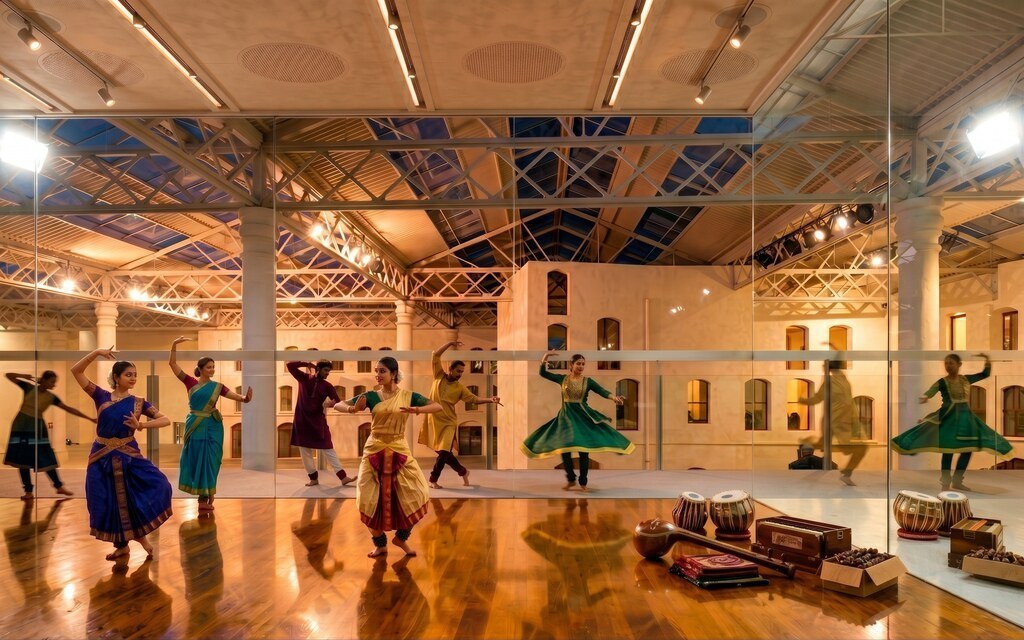
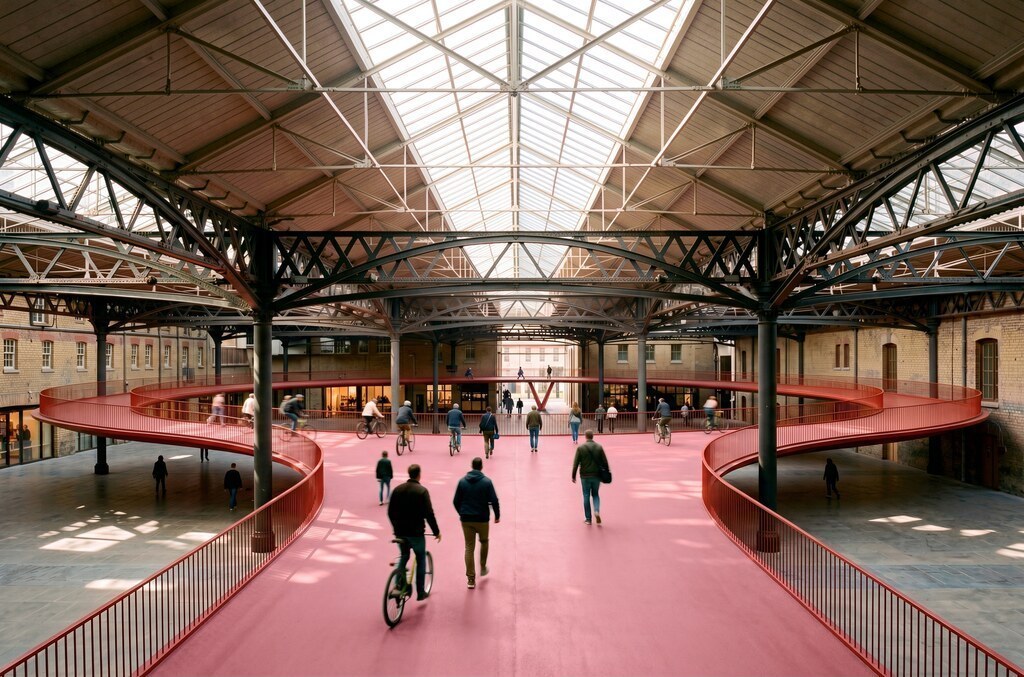
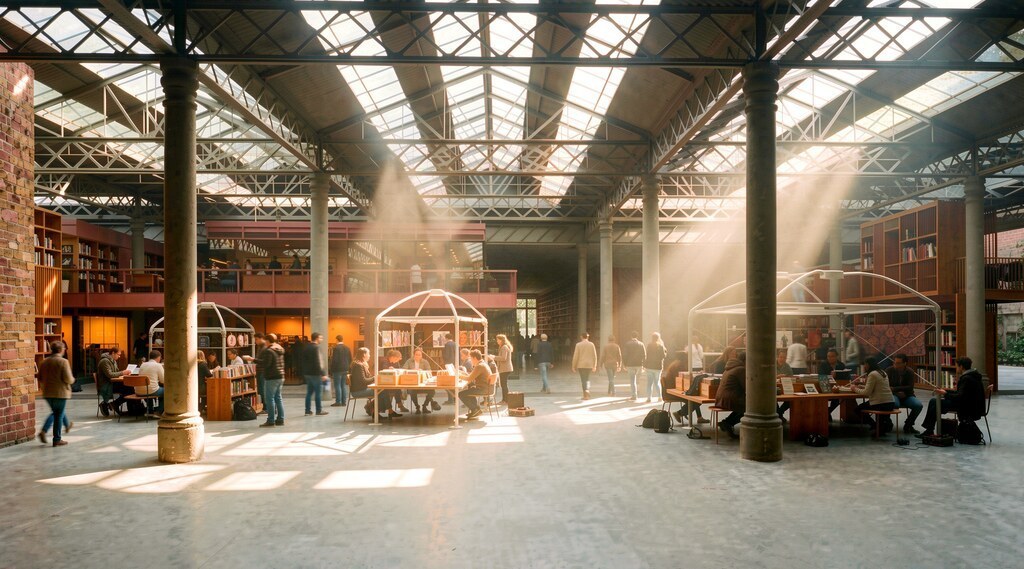
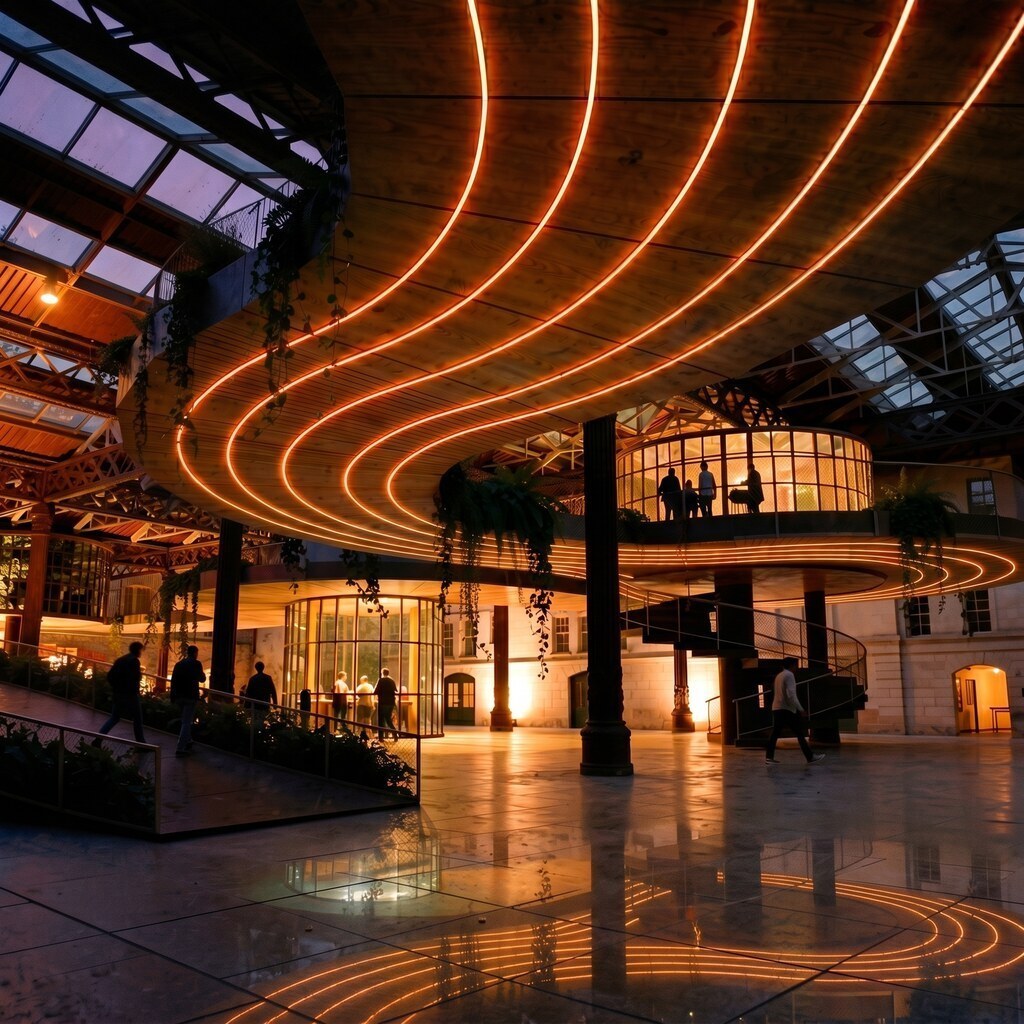
The GENDO 48 shortlist
11 entries selected by the panel from the inaugural weekend competition. Open any finalist to step into the live design canvas.
Designed for the way architecture is actually practised — in collaboration.
Team size
Solo entries are allowed, but teams of 2 or more are strongly preferred — the multiplayer canvas is the premise. Maximum team size is 5.
Gendo accounts
All team members must have active Gendo accounts before the brief drops on Thursday 23 April. Gendo Studio is not required.
One submission
One board URL per team, submitted via the competition form on the Gendo platform. The board is locked at the deadline.
The iron must be legible
Columns and the glazed lantern must appear clearly in your final images. Submissions where the iron has been entirely replaced or obscured will be disqualified.
Free entry
No entry fee. No credit limits. Gendo is fully unlocked for the 48 hours — generate, iterate and explore without restriction.
No extensions
Submission deadline is 23:59 GMT, Sunday 26 April. Work visible on the board after this time will not be assessed.
Sharing
Post your board on Instagram and LinkedIn with #Gendo48 and @gendo_ai. People's Choice is tracked by board link reach over the competition period.
Hashtag
Tag #Gendo48OpenMarket to enter the conversation specifically about this edition.
Build your portfolio in public. Work like real practice.
A competition designed around how architecture actually works — collaborative, constrained, and rewarding.
48 hours.
One iron hall.
Go.
The competition is now closed. Shortlist announced 6 May 2026 — winners announced Monday 11 May 2026.