Photorealistic Portfolio Imagery in Standard Rendering Time
How a residential builder's in-house creative studio upgraded every portfolio plan and cover sheet render without adding time to the process.
Same time
Higher quality at the same time commitment
Accurate
Nothing changed unless it was specified
3 people
In-house creative studio

Designer Builders
Team Size
3-person creative studio
Discipline
Custom residential, occasional small commercial
Toolchain
Chief Architect, D5 Render, Gendo
Clients
Typically retired homeowners, closely involved in design
Designer Builders is a residential builder with an in-house creative studio of one architectural designer and two interior designers, working on custom homes and occasional small commercial projects.
Projects start from builder redlines on printed plans, are translated into Chief Architect, exported to D5 Render for landscaping and lighting, then rendered in Gendo.
"I start a project from builder redlines on printed plans and translate them into Chief Architect. I then export to D5 Render to add landscaping and lighting, then render in Gendo."
— Andrew
Renderings the studio did not want to show
Software limitations meant the studio could not produce imagery it was willing to put in front of clients or on its website.
Homeowners, most of them retired and closely involved in the design of their home, typically needed physical samples and had to imagine their selections applied to the house before they could decide.
A portfolio rebuild that needed photorealism
The studio was revamping its website and every portfolio plan render, and the owner wanted photorealistic quality. Researching AI rendering led to Gendo, and the deciding factor was accuracy rather than style.
"The renderings were very accurate to the original image and did not change items unless I specified so."
Andrew, Architectural Designer
Better output, same time commitment
The important measure for the studio was not raw speed. A photorealistic image now takes about as long as an average-looking standard rendering used to, so the quality step came without a schedule cost.
That made it viable to apply across the whole portfolio rather than reserving it for one or two showcase plans.
"I can get a photorealistic image in about the same time as it did to get an average looking standard rendering. Higher quality, same time commitment."
Renders on the drawing sets
Front perspective renderings now appear on the cover sheets of schematic design and construction document sets, which was not previously possible.
The next step is using Gendo with homeowners directly, to help them select materials, colours and options against their own house rather than from samples.
Before & After
Drag to compare the transformation
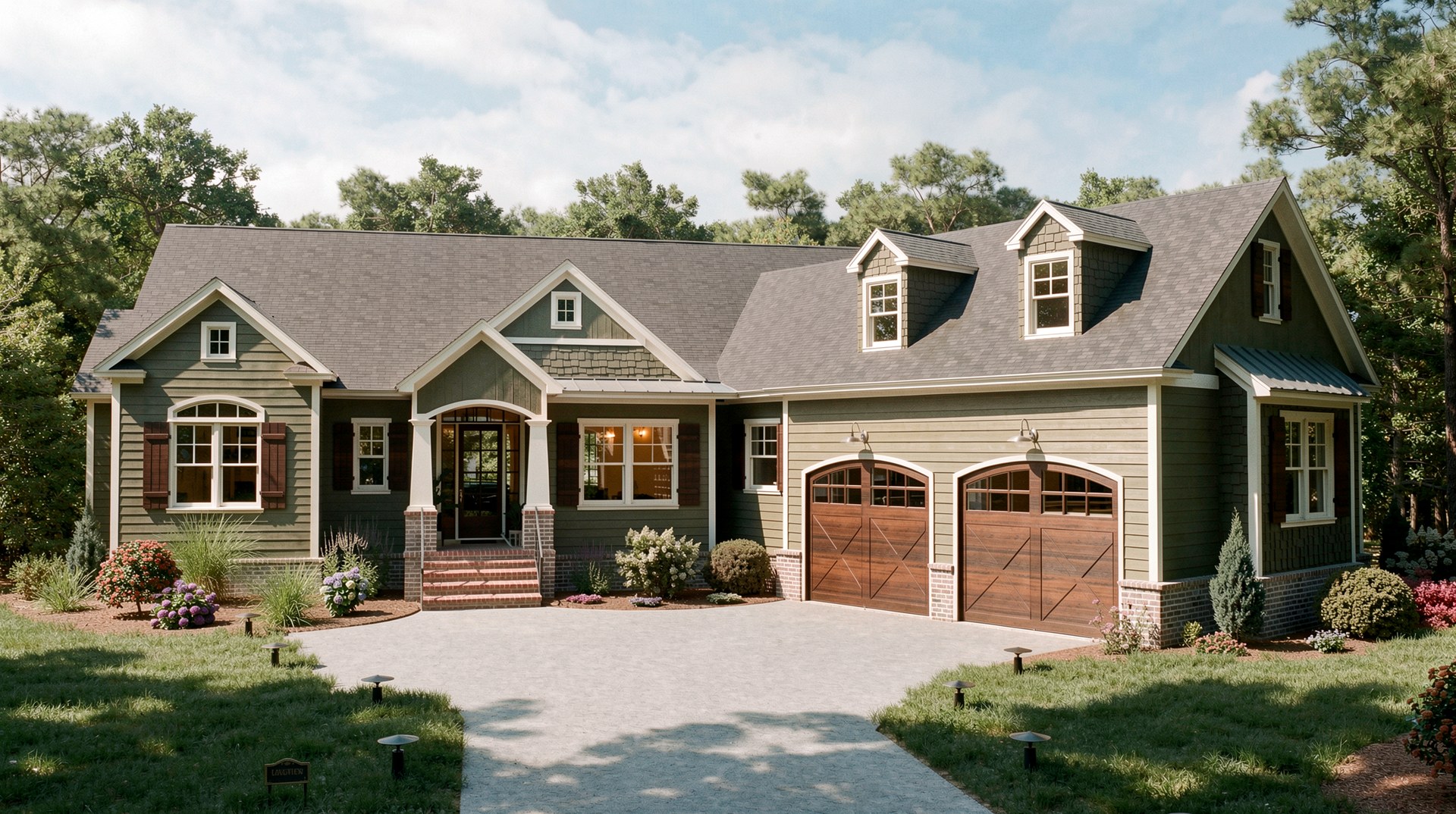
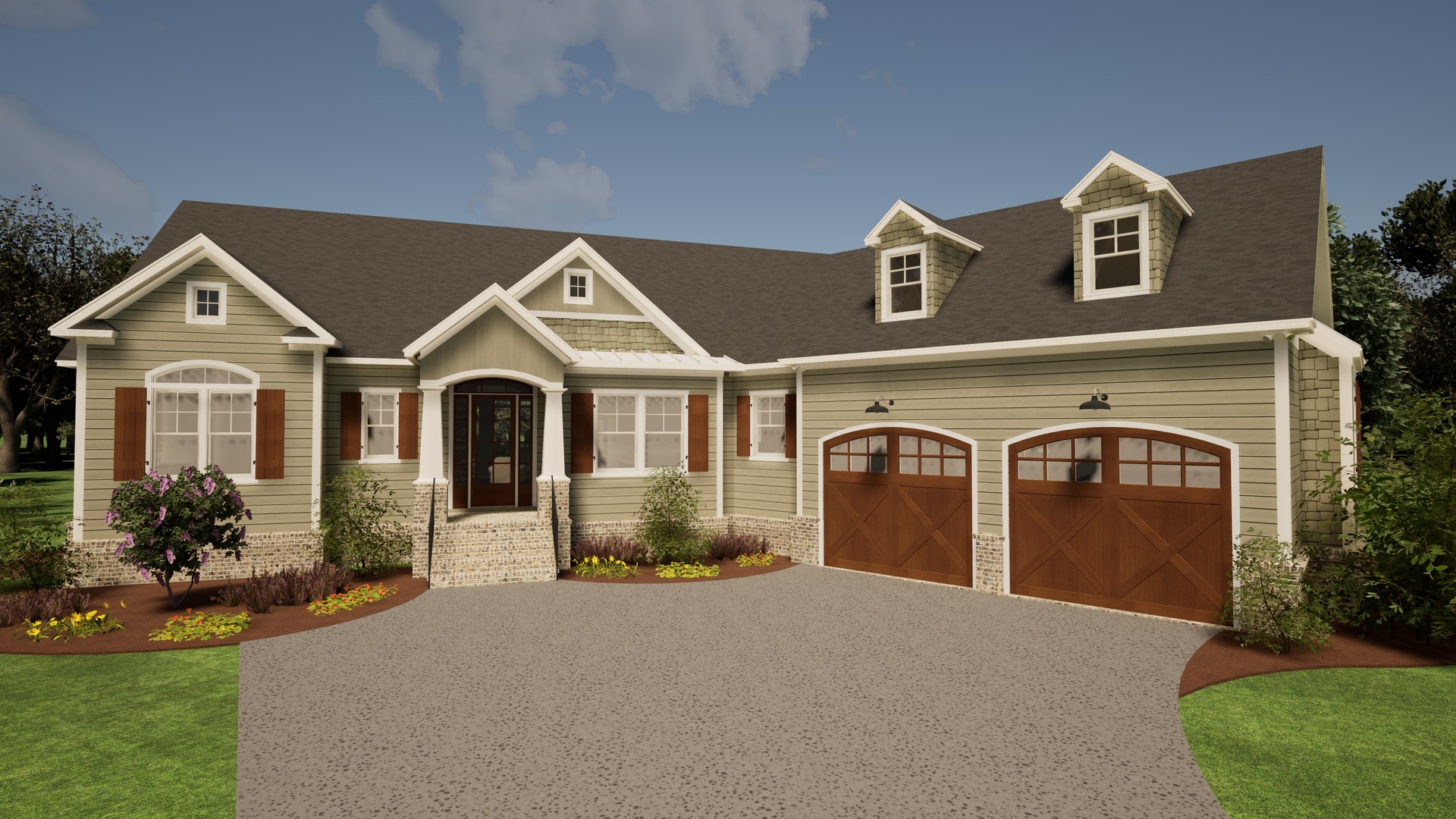
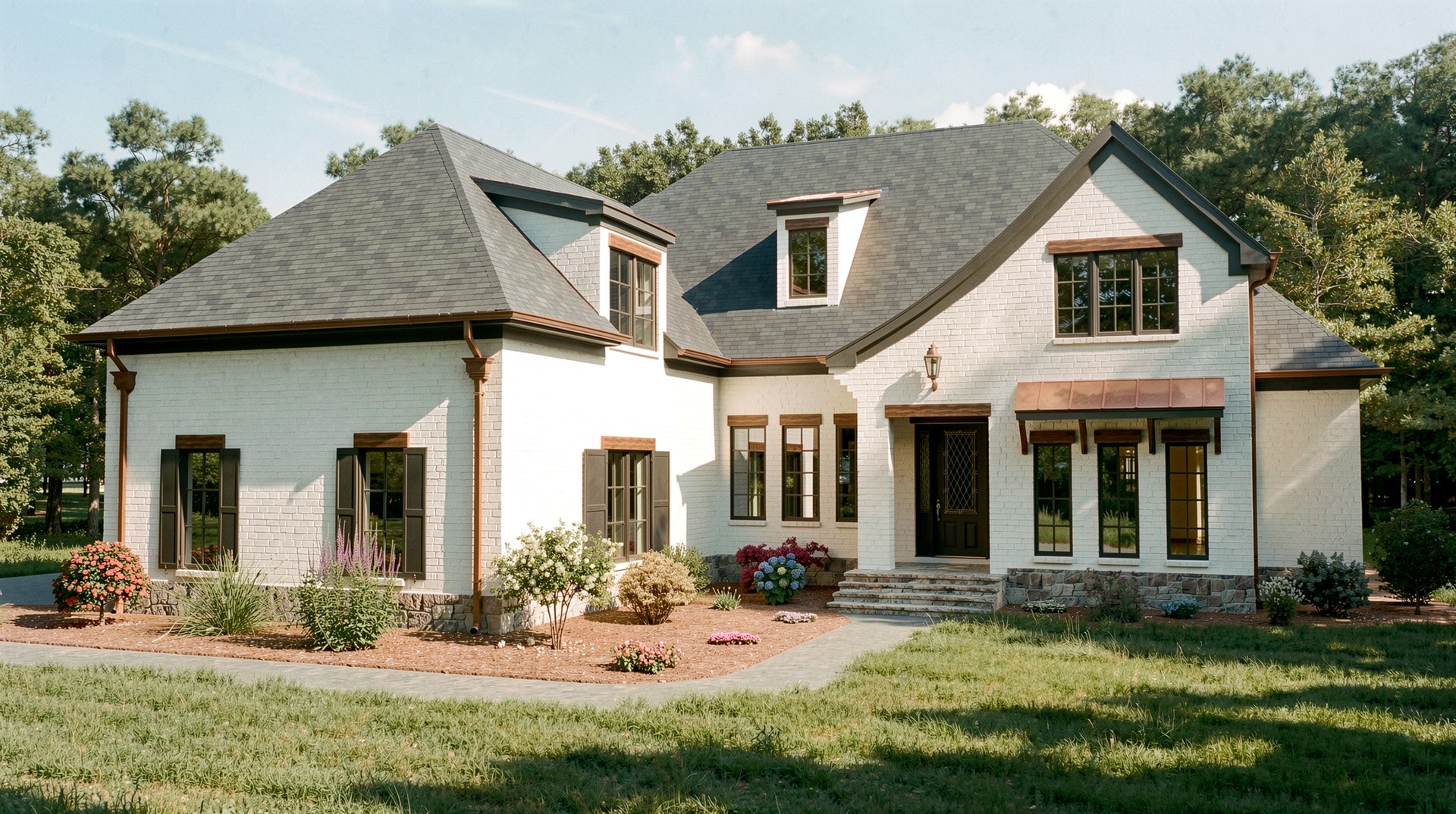
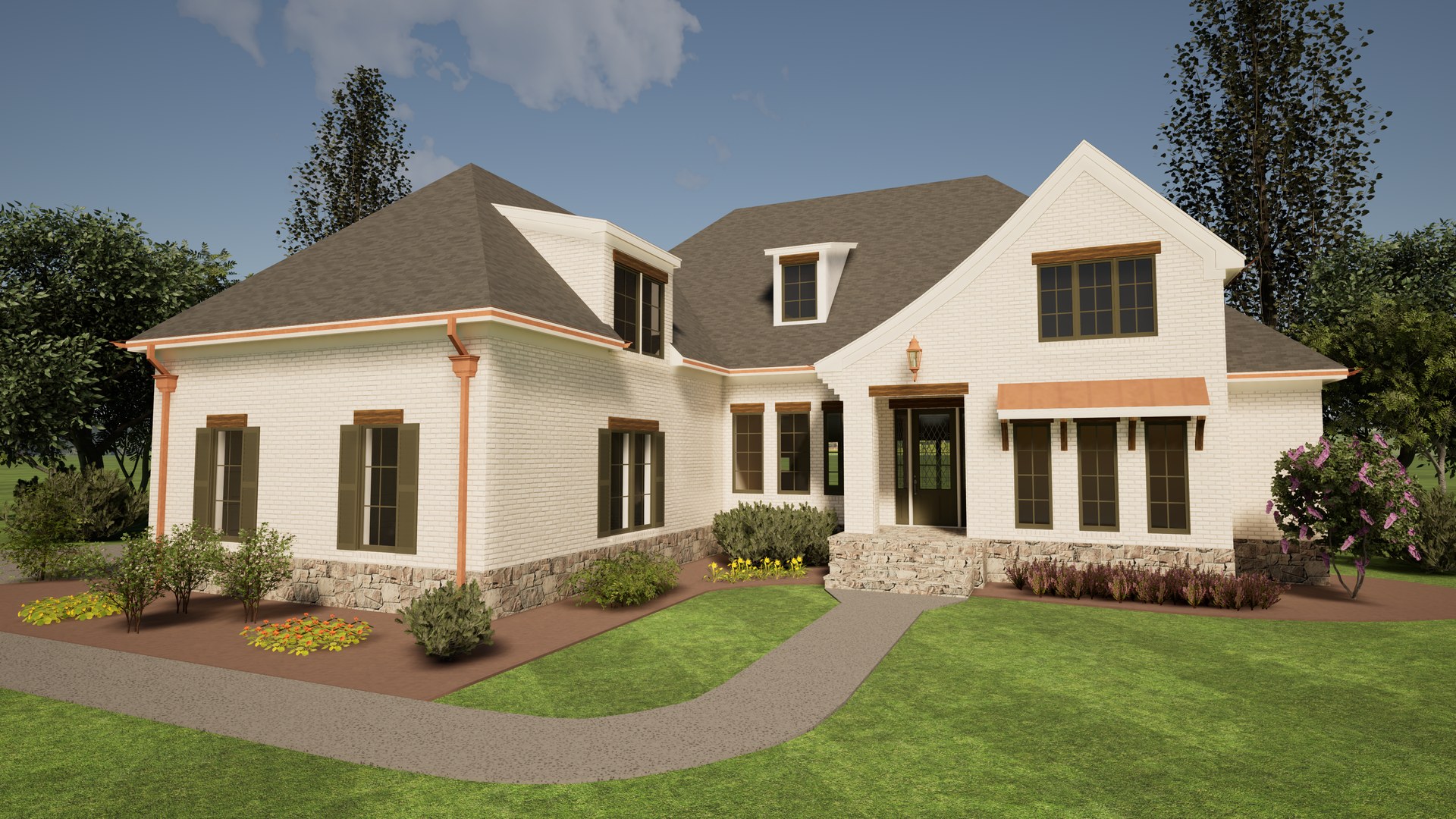
The base render carries the plan, massing and material intent from Chief Architect and D5.
Gendo takes the same view to photorealistic quality without altering the design.
The Impact: A portfolio the studio can show
Photorealistic imagery is now standard across portfolio plans and drawing sets, produced in-house within the existing schedule.
Key Outcomes
Every portfolio plan re-rendered to photorealistic quality
Same time commitment as the previous standard renders
Nothing changes in the image unless it is specified
Included in schematic design and construction sets
Early days, strong internal verdict
Gendo is newly embedded in the workflow, so client feedback is still limited and one client is yet to sign on a set that included the new renderings.
Internally the response is clear: the owner, who set the photorealistic standard in the first place, likes what the studio is now producing.
"Gendo understands architectural design so I can spend more time iterating and less time correcting unwanted changes."
Andrew
Architectural Designer, Designer Builders