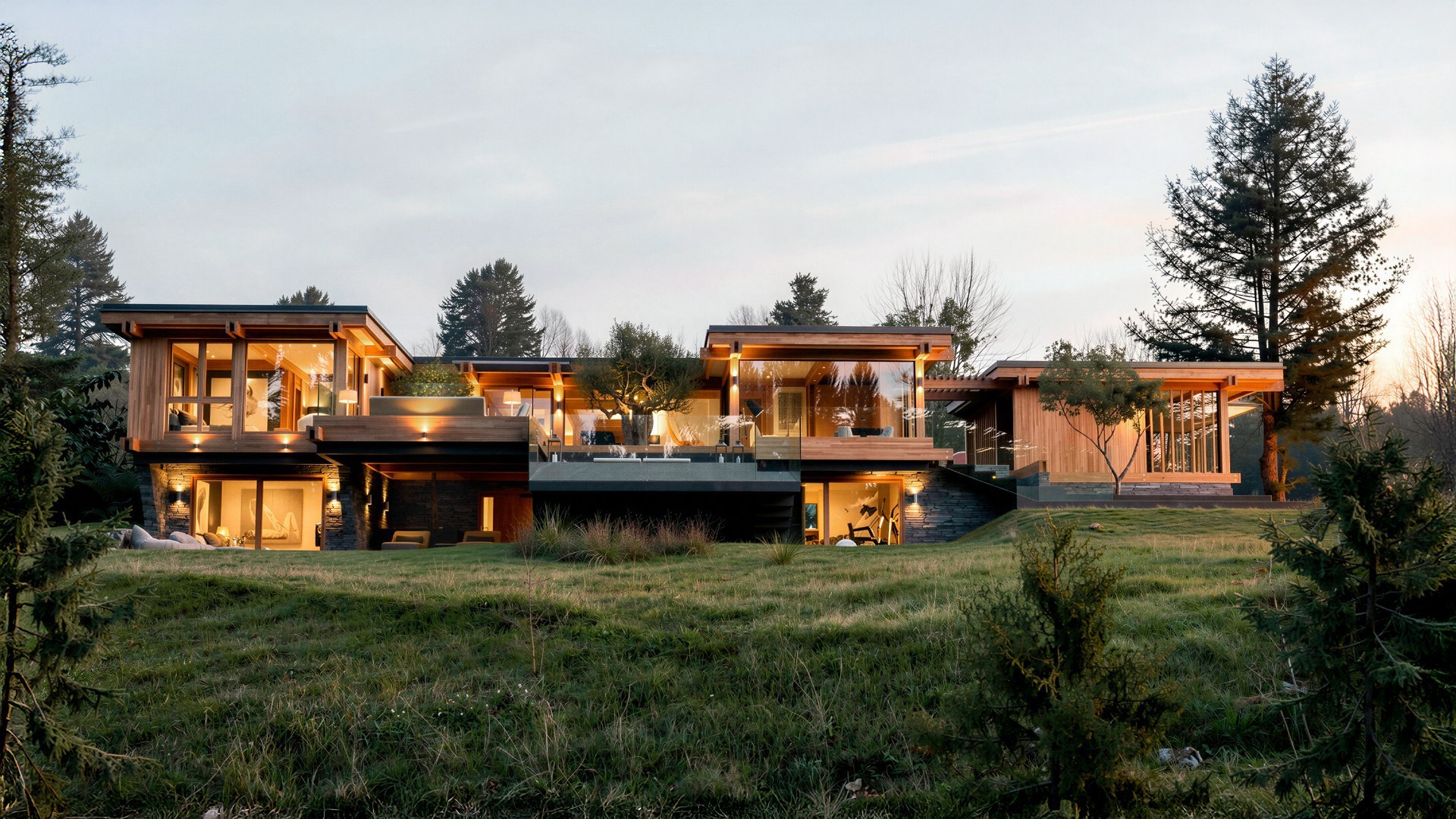
An 80-Person Practice Treats Gendo as a Design Tool, Not a Renderer
How Michael Hsu Office of Architecture uses fast, high-fidelity visualisation as design feedback across mixed-use and public realm work, with multiple competition wins to show for it.
80 people
Architecture and interiors practice
Multiple
Competition wins since adopting Gendo
Iteration
Speed on complex projects, not just output

Michael Hsu Office of Architecture
Team Size
80 people
Discipline
Mixed-use, public realm, broad project range
Toolchain
SketchUp, Revit, Gendo
Used at
All stages, from early design through presentation
Michael Hsu Office of Architecture is an 80-person practice working across a broad range of project types, with a significant body of mixed-use and public realm architecture.
The studio works in SketchUp to Revit, or Revit only, with Gendo now used across the board rather than at a single stage.
"It's a design tool, not a visualization tool."
— Matt Kohman
Renderings that arrived too late to inform the design
Before Gendo, reaching realistic fidelity was slow, and changing anything once you got there was slower still.
That meant a meaningful percentage of design time went into producing imagery that could not be used as design feedback. By the time a view was finished, the decision it might have informed had usually already been made.
Fidelity fast enough to feed back into the design
Matt Kohman found Gendo through Ismail's Instagram and trialled it inside live work. The distinction he draws is not about image quality, which he rates alongside high-end outsourced visualisation, but about when the image arrives: early enough, and at enough fidelity, to change what gets designed next.
"The ability to visualise quickly and collaboratively at high fidelity makes it a powerful tool for design. This is not only a visualisation tool."
Matt Kohman, Lead Designer
Testing ideas at the speed they occur
On complex projects the gain is iteration speed. Ideas can be tested visually while they are still open questions, rather than committed to and then illustrated.
Gendo is used across the board in the studio's process, which for an 80-person practice means it sits inside the standard SketchUp to Revit route rather than beside it.
"All across the board. It is a key tool for me now."
Powerful, and deliberately non-linear
The team's read on the tool is honest: interesting and powerful, but non-linear and challenging to control at first. That is the trade for working at design speed rather than production speed.
The practice does not typically show optionality to clients, so the exploration is primarily internal, used to mature the design before anything is presented.
The Impact: Design time returned to design
Visualisation stopped being a downstream cost and became part of how the studio arrives at the scheme.
Key Outcomes
Multiple wins since Gendo entered the process
Ideas tested visually on complex projects
Less of it spent producing unusable imagery
Quality on par with high-end outsourced work
Held against an outsourced benchmark
The studio measures the output against the high-end visualisation it would otherwise commission, and the response has been positive on that basis.
Because optionality is kept internal, the client-facing change is simply better images, with the design maturation happening before the presentation rather than during it.
"The ability to visualise quickly and collaboratively at high fidelity makes it a powerful tool for design. This is not only a visualisation tool."
Matt Kohman
Lead Designer, Michael Hsu Office of Architecture