Architecture Design Collaboration: The Power of a Design Canvas
Gendo
11 March 2026
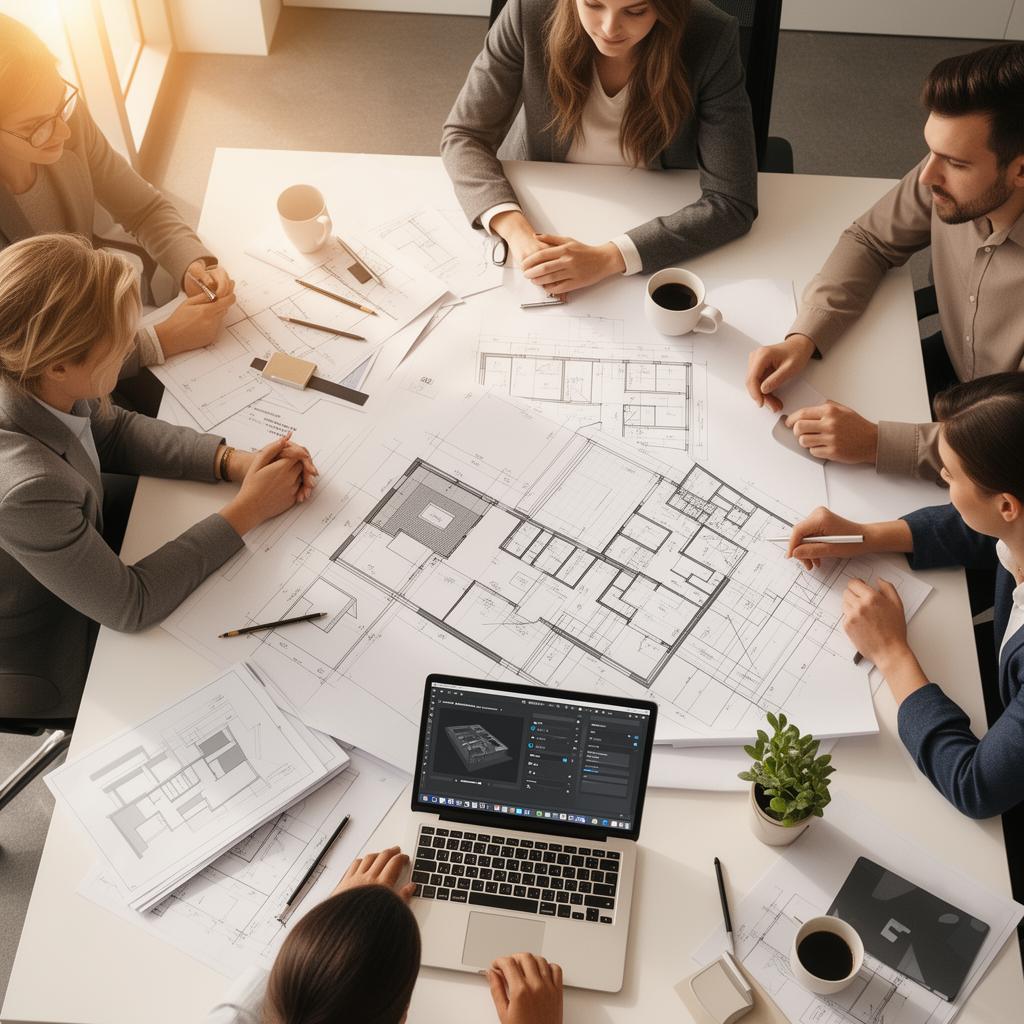
Great architecture rarely emerges from a single sketch; it evolves through conversation, iteration, and collective judgment. Architecture design collaboration is the structured practice that turns disparate ideas into coherent buildings, aligning design teams, consultants, and clients around shared goals.
For firms that want faster delivery, stronger presentations, and higher win rates, mastering collaboration is now as critical as mastering form and materials. With the rise of the Architectural Design Canvas, platforms like Gendo are transforming this process from a fragmented hurdle into a competitive advantage.
What is an Architectural Design Canvas?
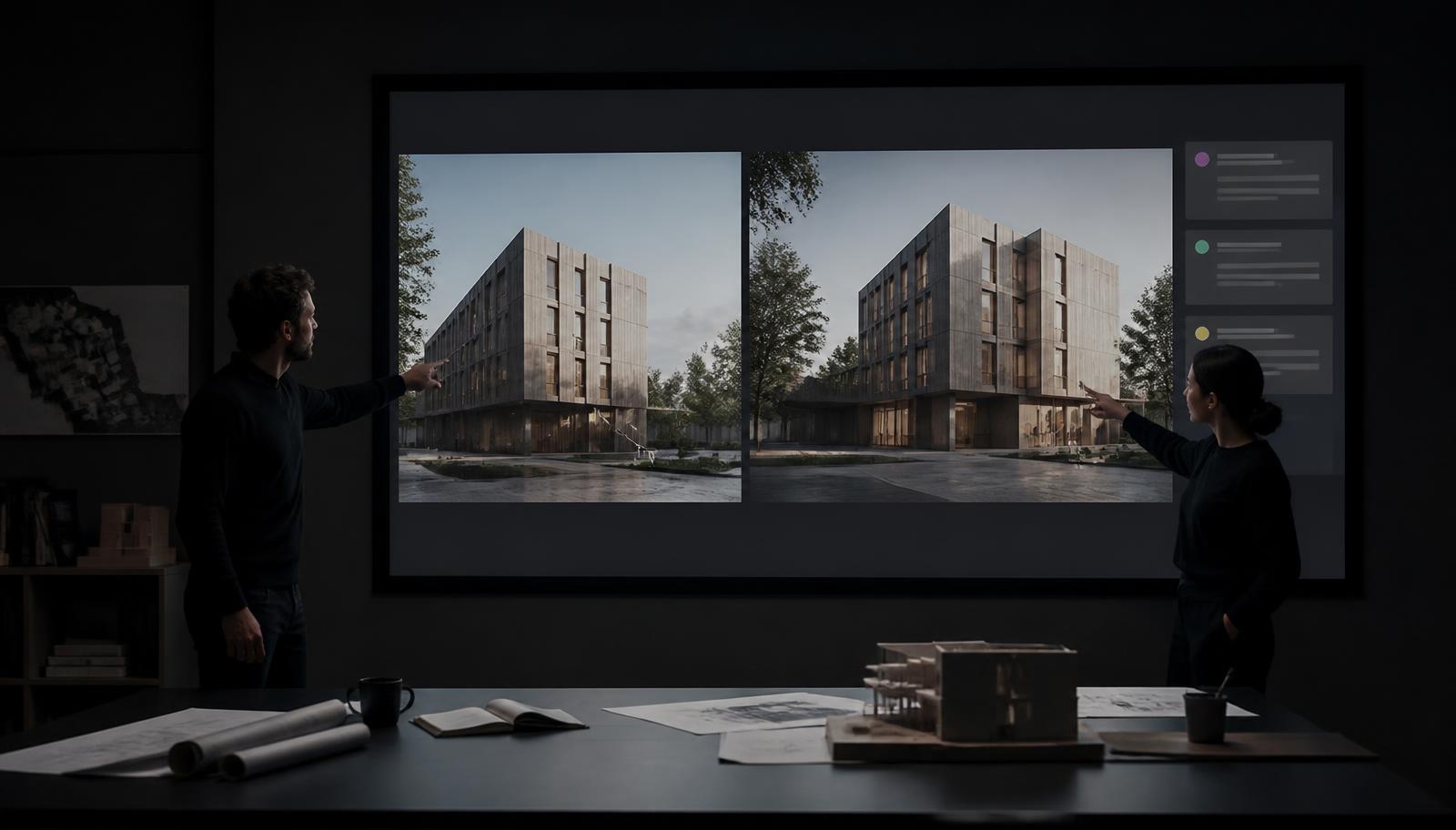
An Architectural Design Canvas is a unified digital workspace that combines generative AI, version control, and stakeholder feedback into one interface. Unlike traditional rendering software that sits at the end of a workflow, a design canvas like Gendo lives at the centre, allowing teams to iterate visually in real-time while maintaining a single, traceable record of every design decision.
Why Architecture Design Collaboration Matters
Collaboration in architectural design is more than just sharing files. It is about creating a predictable process where ideas are explored rapidly and feedback is captured clearly.
- Speed: AI-accelerated render turnarounds mean earlier validation and fewer costly late-stage changes.
- Quality: Multiple perspectives — sustainability, structure, and cost — sharpen solutions when the right voices are heard at the right time.
- Client Confidence: Transparent feedback loops and visual clarity increase trust and improve win rates.
- Risk Reduction: A single source of truth prevents conflicting documents and reduces liability from undocumented decisions.
Common Collaboration Pain Points
Even elite studios struggle with design collaboration. Recognising these typical blockers is the first step toward optimisation:
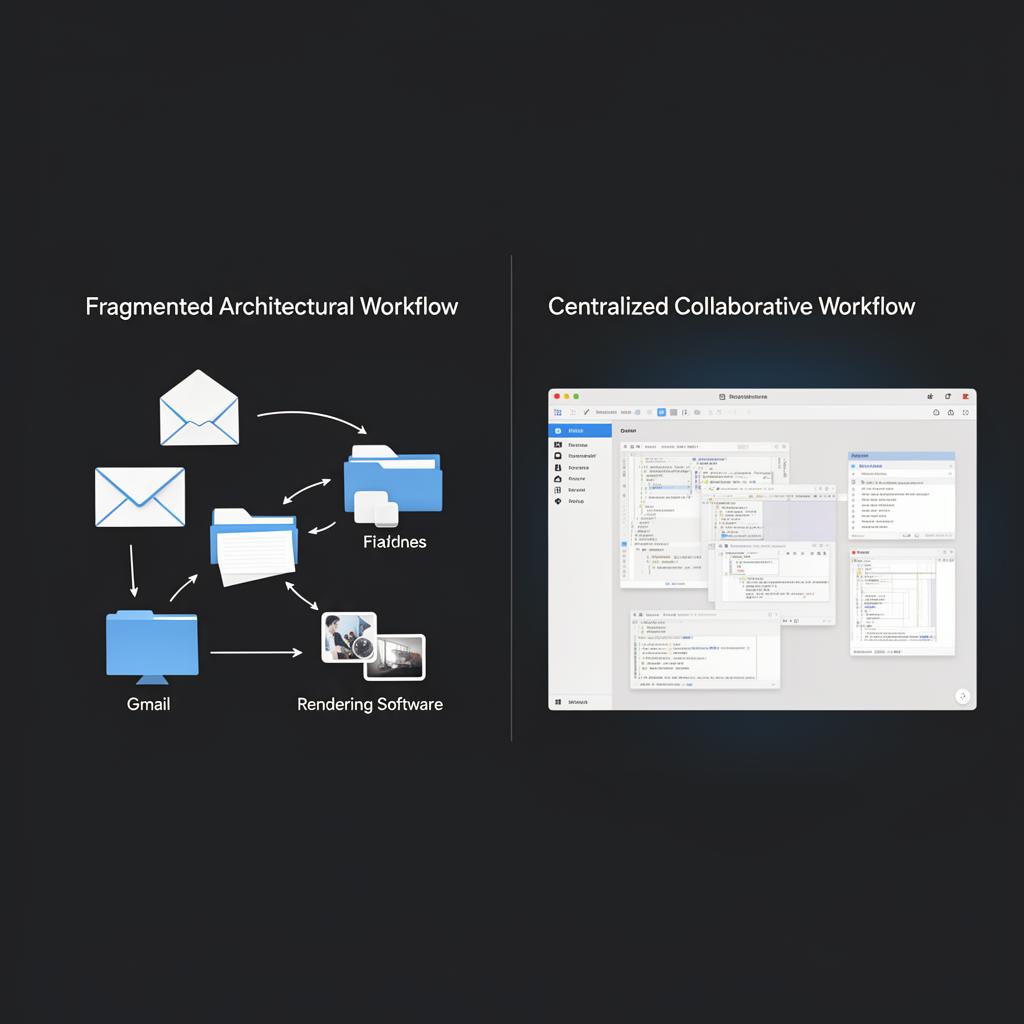
- Fragmented Toolchains: Tools for rendering, modelling, and project management often do not communicate with one another, forcing manual exports and version confusion.
- Version Chaos: Multiple file copies and detached email threads create anxiety about which drawing is the authoritative one.
- Slow Iteration Loops: Waiting days for render revisions stalls creative momentum. The faster an idea is tested, the better the outcome.
- Security & Ownership: Design IP is sensitive. Firms need systems that respect confidentiality and keep control over data.
How AI Fits Into the Collaborative Workspace
AI is no longer just a standalone utility; it is a core collaborator. However, the most meaningful gains happen when AI is embedded directly into a collaborative workspace.
- Speeding Revisions: AI-powered rendering speeds up visual exploration. Instead of waiting days, teams can test multiple lighting or material schemes in minutes.
- Augmenting Exploration: Generative tools propose multiple massing schemes that humans then refine and select.
- Capturing Context: When an AI output is stored alongside the critique that shaped it, it becomes part of the project record — not an ephemeral experiment.
Design to Image: From Sketch to High-Fidelity Render
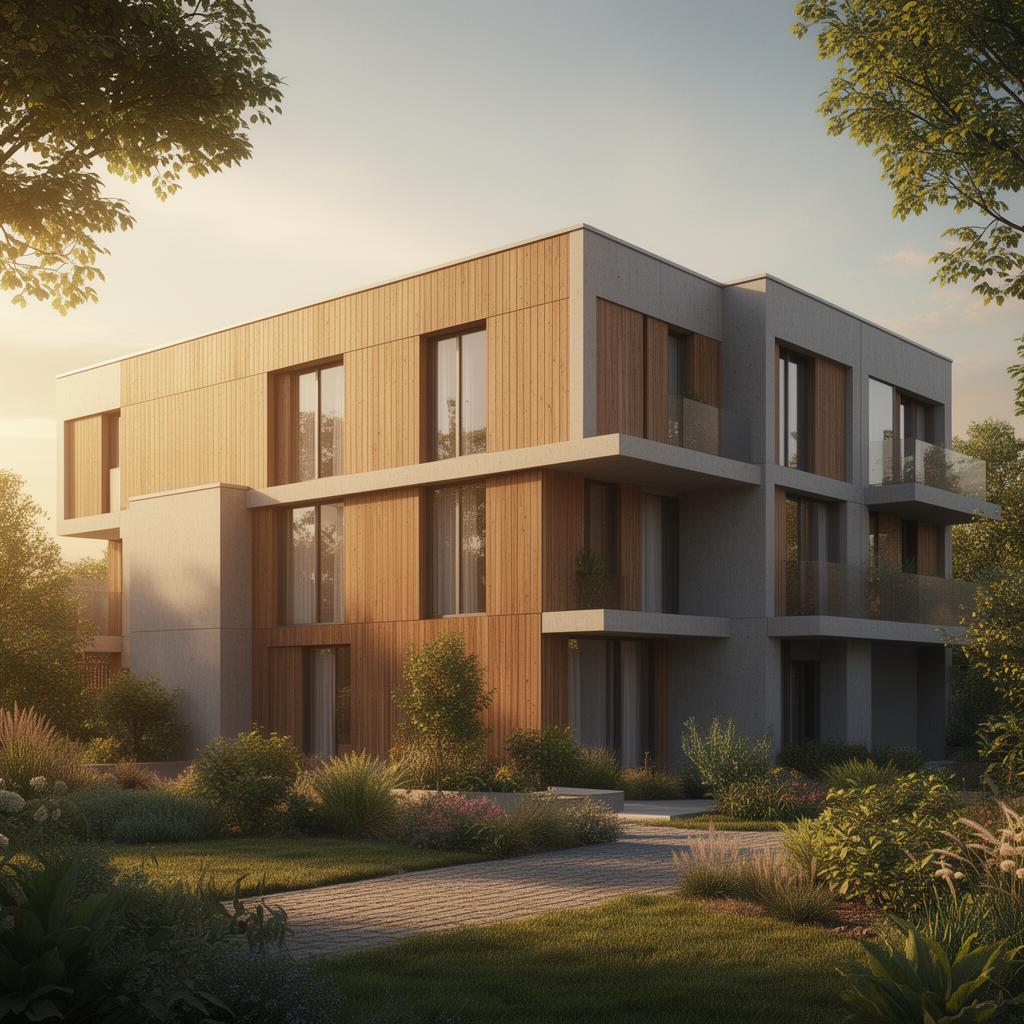
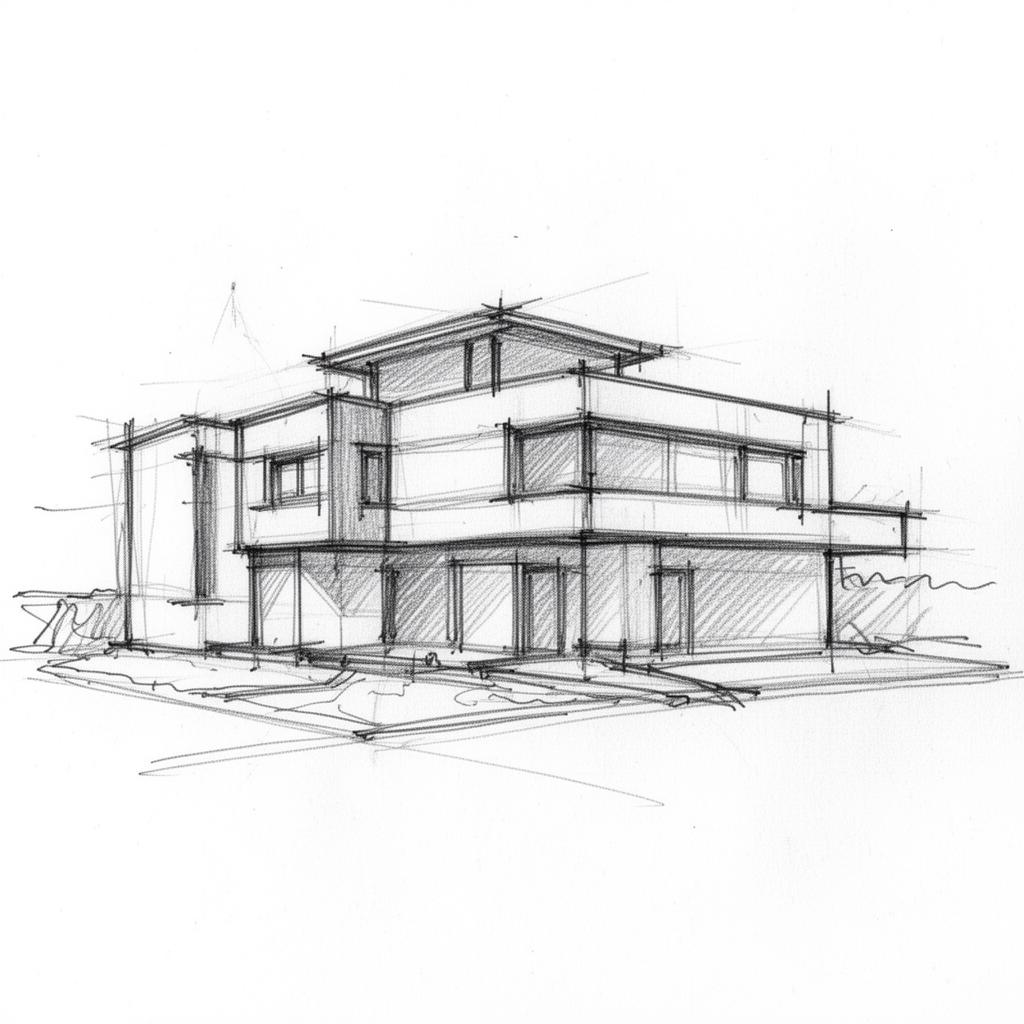
Upload a simple concept sketch and watch Gendo's AI transform it into a photorealistic render while strictly adhering to your original design intent. Geometry stays fixed. Materiality and lighting are applied intelligently.
The Gendo Advantage: From Concept to Confidence
Centralised platforms are changing the game by bringing these ideas into a single interface. Gendo functions as an Architectural Design Canvas, replacing ad-hoc tools with an end-to-end workspace.
- Unified History: Every variation and client comment is captured alongside the visuals. This eliminates version chaos.
- Design to Image: Upload a simple sketch or a basic Rhino/Revit export, and Gendo's AI adds materiality and lighting while strictly adhering to your original intent.
- Enterprise Trust: With GDPR-compliant hosting and SSO, Gendo is built for professional studios that require high-level governance and IP protection.
Practical Techniques for Better Collaboration
- Use Visual Commenting: Stop sending vague emails. Pin comments directly to specific parts of a render so ambiguity disappears.
- Capture Decision Logs: Record every approval at the moment it is made. This prevents months of back-and-forth during technical coordination.
- Run Design Sprints: Use Gendo to generate three distinct facade options by the end of a single afternoon session.
- Adopt Branching: Explore a risky design idea on a separate canvas branch without destabilising your master project file.
Conclusion
Architecture design collaboration is the backbone of successful contemporary practice. When teams replace fragmented tools with a centralised approach, they unlock faster iterations and clearer communication.
By leveraging a platform like Gendo, firms can move from concept to confidence in a fraction of the traditional time. The future of architecture is not just about better buildings — it is about a better process for creating them.